
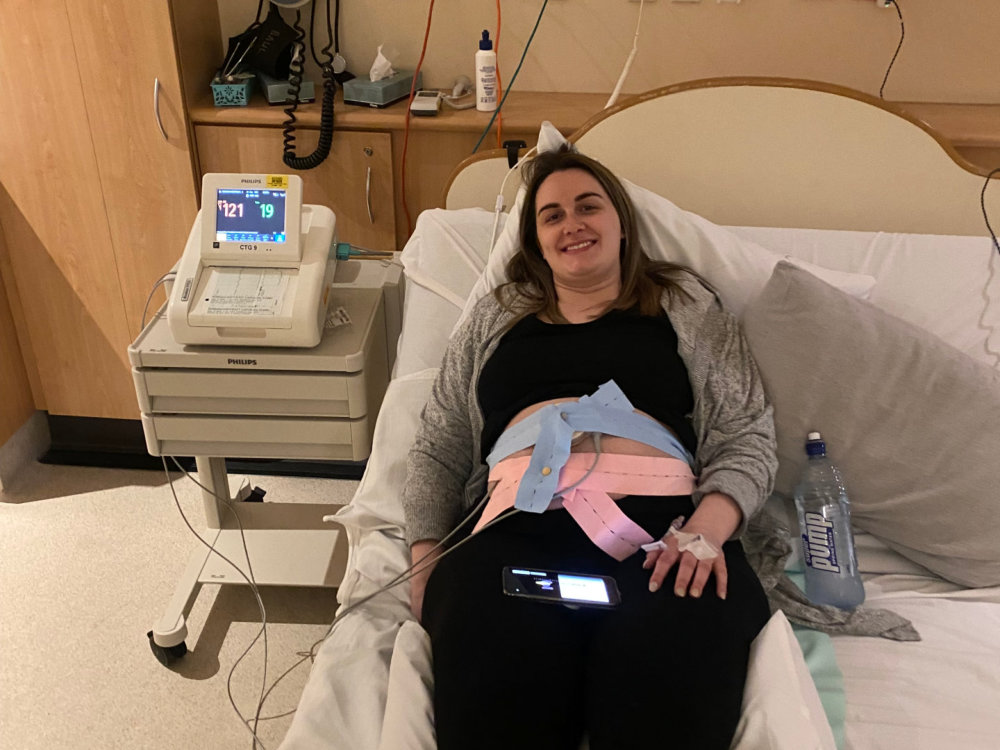
Induction for Suspected Big Baby: What the Evidence Really Says
So You’re Having a “Big” Baby? Understanding Induction for Suspected Macrosomia
Being told your baby might be “big” can trigger a wave of emotions — excitement, worry, pressure, or confusion. Many parents suddenly find themselves facing recommendations for induction of labour or even a planned caesarean, often without a clear understanding of the evidence behind those suggestions.
This article brings together high‑quality research from Cochrane, Evidence Based Birth, and Dr Sara Wickham to help you feel informed, confident, and empowered.
How Accurate Are Predictions of a “Big” Baby?
One of the most important facts parents rarely hear is this:
- Around half of all babies suspected of being big are actually average size at birth.
Evidence Based Birth reports that both ultrasound and abdominal palpation have wide margins of error — often 10–15%. That means a baby estimated at 4.2 kg could easily be 3.6 kg.
Dr Sara Wickham’s review of the Big Baby Trial found that 58–60% of babies labelled “big” on ultrasound were not big at birth.
In other words, many families are making major decisions based on an estimate, not a certainty.
Why Induction Is Often Recommended
The most common reason given for induction or caesarean is to reduce the risk of shoulder dystocia, a situation where the baby’s shoulders become stuck after the head is born.
Shoulder dystocia can be serious — but the evidence shows a more nuanced picture than many parents are told.
induction for suspected big baby
Does Induction Reduce Shoulder Dystocia or Injury?
Here’s what the research consistently shows:
From the Cochrane Review
- Induction may slightly reduce the rate of shoulder dystocia.
- But it does not reduce brachial plexus injury, the main injury parents are told induction will prevent.
- Induction does not improve neonatal outcomes.
- Induction does not reduce caesarean rates.
From Evidence Based Birth
- Induction for suspected big baby does not prevent serious complications.
- The risk of shoulder dystocia is not eliminated by induction.
- Many babies labelled “big” are not big at all.
From Dr Sara Wickham
- 94% of babies weighing 4 kg or more do not experience shoulder dystocia.
- Shoulder dystocia can occur with babies of any size.
- Being told your baby is “big” can increase fear, anxiety, and pressure — even when the baby is average size.
The key takeaway: Induction does not prevent the harm it is intended to prevent.
Risks of Induction for Suspected Big Baby
Induction is not a neutral intervention. When done for a baby who may not even be big, the balance of risks becomes even more important.
Research shows induction for suspected macrosomia can increase:
- Longer, more intense labour Induced contractions are often stronger and more painful.
- Perineal tearing Faster or instrumental births can increase the risk of significant tears.
- Birth trauma Both physical and emotional trauma can be more common.
- Fetal distress Stronger contractions can reduce oxygen flow.
- Emergency caesarean Especially if the cervix is not ready and induction fails.
These are not small considerations — and parents deserve full, balanced information.
What About Planned Caesarean?
Some providers recommend a planned caesarean to avoid shoulder dystocia altogether. However:
- Caesarean carries its own risks: infection, haemorrhage, longer recovery, and complications in future pregnancies.
- Most babies suspected of being big are not big.
- Most big babies are born vaginally without complications.
Routine caesarean for suspected big baby is not supported by evidence, except in very specific circumstances.
So What Are Your Options?
1. Ask for the actual evidence
You’re entitled to know the absolute risks — not just the scary possibilities.
2. Consider the accuracy of the estimate
If there’s a 50% chance your baby is average size, does the recommendation still make sense?
3. Explore all your options
These may include:
- Waiting for spontaneous labour
- Monitoring and reassessment
- Declining induction
- Discussing your individual risk factors
4. Seek supportive, evidence‑based antenatal education
This is where high‑quality childbirth education makes a real difference.
Want to Feel Calm, Confident, and Informed?
If you’re navigating decisions about suspected big baby, induction, or birth choices, evidence‑based childbirth education can be transformative.
My Hypnobirthing Adelaide classes provide:
- Evidence‑based information so you understand your options
- Tools for calm, confident labour
- Strategies for informed decision‑making
- Support for empowered birth experiences
You can learn more here: 👉 https://www.katebergamasco.com.au/hypnobirthing-adelaide/
These classes are designed to help parents feel grounded, informed, and in control — no matter what recommendations they receive.
Final Thoughts
Being told your baby might be “big” can feel overwhelming, but the evidence is clear:
- Size predictions are often inaccurate
- Induction does not prevent the injuries parents are told it will
- Induction introduces its own risks
- Many big babies — and many babies suspected of being big — are born safely without intervention
You deserve balanced information, supportive care, and the confidence to make decisions that align with your values and your birth preferences.




Leave a Reply
Want to join the discussion?Feel free to contribute!